

Deep tissue massage in Sofia
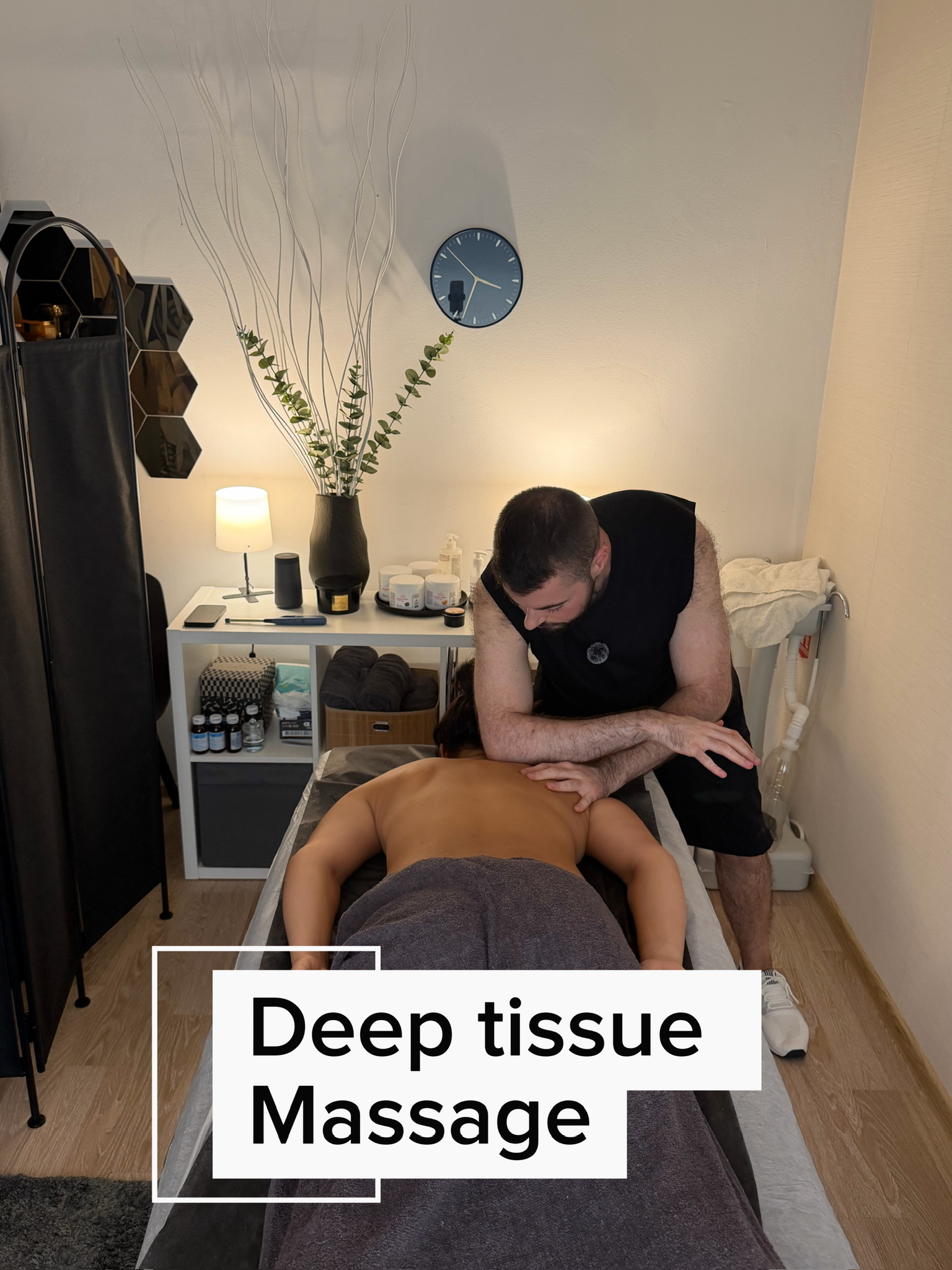
Deep tissue massage in Sofia is a massage technique that targets the deeper layers of muscle and connective tissue. It uses slow, controlled and more intensive movements, with pressure adjusted to your individual sensitivity and the specific areas being treated.
This type of massage is often chosen by people who prefer a more intensive session and want targeted attention to strained or tense muscle areas.
What is deep tissue massage?
Unlike relaxation massage, which mainly focuses on unwinding and rest, deep tissue massage uses slower, more targeted techniques.
The therapist may work on specific areas with varying levels of pressure according to your individual needs.
Despite the name deep tissue, the treatment does not simply mean applying the strongest possible pressure.
Control and correct technique are more important than force.
Which areas can be treated?
Deep tissue massage can focus on various muscle areas, including:
- the back;
- the shoulders;
- the neck;
- the lower back;
- the thighs;
- the buttocks;
- the legs.
The specific areas are selected according to your individual needs and reason for visiting.
Who might it be suitable for?
Deep tissue massage may appeal to people who:
- prefer a more intensive massage;
- have physically demanding daily routines;
- spend long periods in the same position;
- exercise regularly;
- experience built-up muscle tension;
- want extra attention to specific muscle areas.
Before the session, tell your therapist what level of pressure you prefer and whether any areas are particularly sensitive.
Deep tissue massage for the back and shoulders
The back and shoulders are among the areas frequently targeted during deep tissue massage.
Prolonged sitting, computer work, physical exertion and repetitive movements can be associated with tension and stiffness.
The session can be adapted to spend more time on these areas.
If your tension is concentrated mainly in your neck, explore our neck massage in Sofia.
What happens during a deep tissue massage?
Before the session begins, you can discuss which areas you would like the therapist to focus on.
The therapist may start with gentler techniques and gradually adjust the pressure.
Deep tissue massage often involves slower, more targeted movements than classic or relaxation massage.
Communication with your therapist is important throughout the session. If the pressure feels too strong or causes sharp pain, let your therapist know.
Is deep tissue massage painful?
Deep tissue massage can be more intensive, but it does not need to be painful to be performed well.
The pressure should be controlled and adjusted to your individual sensitivity.
Excessive pain is not evidence that a massage is more effective.
Deep tissue massage or classic massage?
The main difference lies in the approach and intensity.
Classic massage may use a variety of techniques with a broader focus on the muscles and relaxation.
Deep tissue massage generally involves slower, more targeted work on specific muscle areas.
If you prefer a more moderate, versatile massage, classic massage may be a more suitable choice.
Deep tissue massage or therapeutic massage?
These services may use similar techniques, but they are not necessarily the same.
Deep tissue massage is characterised by deeper, controlled work on muscle tissues.
Therapeutic massage focuses primarily on selecting techniques according to your individual needs and specific areas of tension.
Deep tissue massage or sports recovery massage?
Sports recovery massage is tailored primarily to physical activity, training and the muscle groups used during sport.
Deep tissue massage is not exclusively for people who exercise. It may also appeal to those with physically demanding routines or a preference for more intensive massage techniques.
What can you expect after a deep tissue massage?
After a more intensive session, some people may experience temporary tenderness in the treated areas.
Responses vary from person to person and depend on the techniques used, the intensity and individual sensitivity.
If you experience severe, persistent or unusual pain after the session, seek an appropriate medical assessment.
When might deep tissue massage be unsuitable?
More intensive massage techniques are not suitable in every situation.
If you have an acute injury, inflammation, a skin infection or open wounds, unexplained swelling, suspected thrombosis, recent surgery or another significant medical condition, seek medical advice first.
Also tell your therapist if you take medication or have a condition that may increase your tendency to bruise or bleed.
Deep tissue massage in central Sofia
At our studio in central Sofia, you can book a deep tissue massage with intensity tailored to your individual comfort.
Before the session begins, you can discuss which areas you would like to have treated and your preferred level of pressure.
Frequently asked questions
What is the difference between deep tissue and classic massage?
Deep tissue massage generally uses slower, more targeted techniques on specific muscle areas. Classic massage may take a broader approach and use varying levels of pressure.
Should deep tissue massage hurt?
No. The massage may feel intensive, but severe pain is not the aim of the session.
Is it suitable for people who exercise?
It may appeal to people who exercise regularly. However, for specific training-related needs, you may also wish to consider sports recovery massage.
Can the session focus only on my back?
The session can focus on specific areas according to the services available and your individual needs. Discuss your preferences before the massage begins.
How often can I have a session?
There is no single frequency that suits everyone. It depends on the intensity of the session, your physical activity and your individual response.
Book a deep tissue massage in Sofia
If you prefer more intensive, targeted work on strained muscle areas, book a deep tissue massage in Sofia.